Design ideas
CNC carved stone wall cladding: designs, thickness and fixing
Silgar Enterprises · · 2 min read
How CNC carving works, the pattern families that suit Indian homes and buildings, typical thicknesses, fixing methods and the lighting that makes relief come alive.
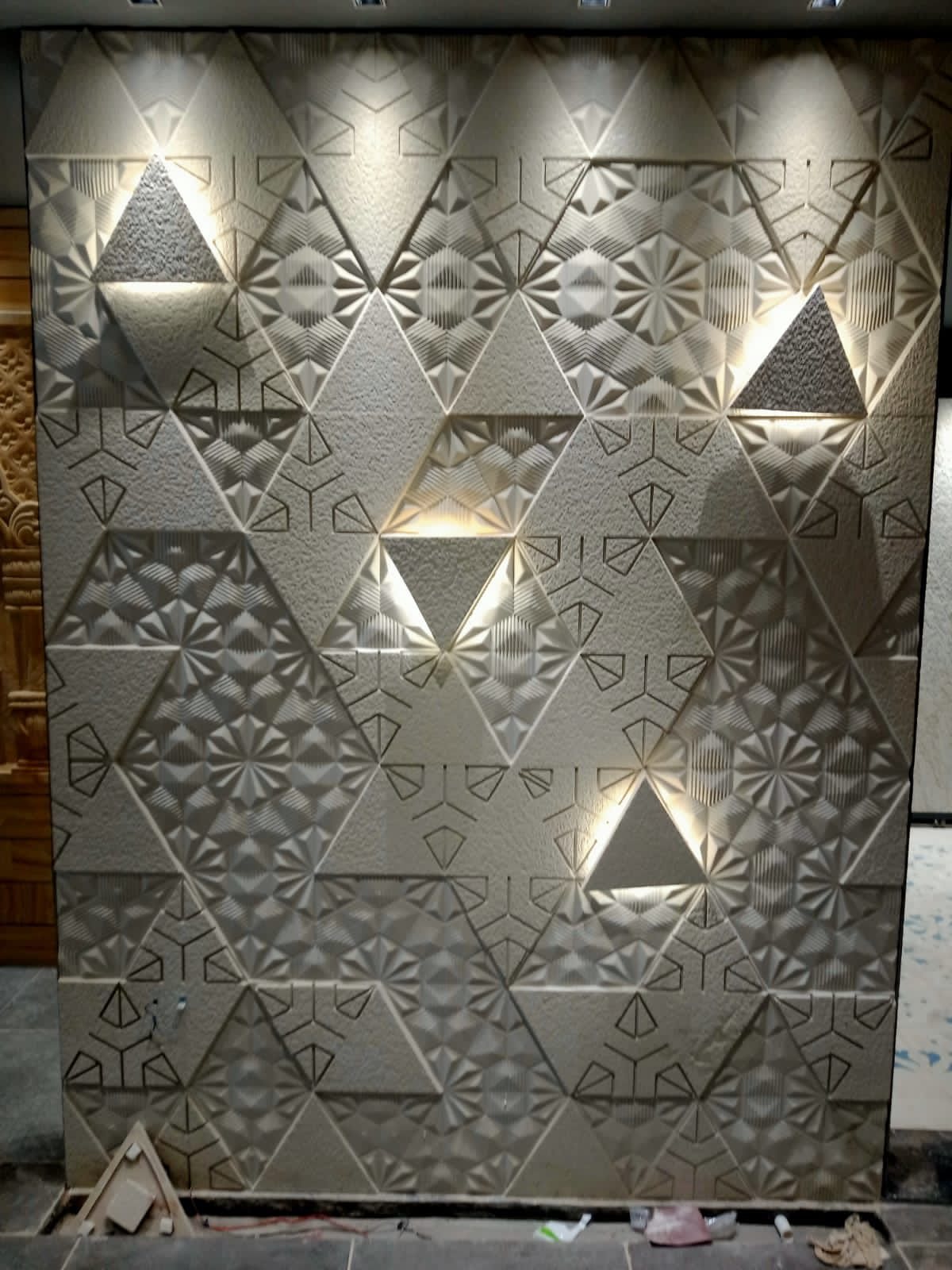
Carved stone walls have moved from palaces and temples into homes, offices and hotels. CNC carving makes intricate patterns accurate and repeatable, while hand finishing keeps them warm and natural. Here is what to know before you design one.
What CNC carving means
A designer first creates the pattern on the computer, in 2D or 3D. A CNC (computer-controlled) router then cuts the stone layer by layer, following that file, so every panel matches the drawing and joins neatly with the next. Artisans finish the edges, deepen details and polish or texture the surface by hand.
Pattern families
- Geometric — hexagons, triangles, stars and grids: crisp and modern.
- Waves and dunes — flowing lines that look beautiful under side light.
- Floral and arabesque — classic motifs for living rooms, lobbies and pooja rooms.
- Relief art — one large artwork such as a mandala, a tree of life or a lotus pond.
Where it works best
- TV and living room walls — one carved wall is enough to define a room.
- Entrance foyers and lift lobbies — a strong first impression.
- Staircase walls — large patterns that unfold as you climb.
- Pooja rooms — floral, lotus or arch patterns as a backdrop.
- Boundary walls and facades — weather-resistant stone with bold relief.
- Offices, hotels and spas — branded or calming textures.
Stone, thickness and weight
Marble, sandstone and other natural stones can all be carved; the right choice depends on colour, indoor or outdoor use and budget. Flat patterned cladding is commonly made from stone around 18–25 mm thick, while deep relief panels need more depth — often 30–50 mm. Natural stone weighs roughly 2.3–2.7 tonnes per cubic metre, so the wall and the fixing method matter. We confirm the thickness for each design after seeing the wall.
Fixing methods
- Adhesive fixing with a stone adhesive suits lighter interior panels on sound plaster or concrete.
- Dry cladding with stainless-steel clamps and anchors suits heavy panels, exterior walls and greater heights, and leaves an air gap that helps with moisture.
Bring the carving to life with light
Relief is all about shadow. A linear LED at the top or bottom of the wall — grazing light — reveals every curve. Thin translucent stone can also be backlit for a glowing effect, as in our backlit triangle wall.
Planning checklist
- Wall size and a straight-on photo.
- Positions of switches, AC units and the TV mount.
- Indoor or outdoor, and whether the wall gets direct rain or sun.
- Light or warm stone; polished, honed or textured finish.
Send these through our custom requirement form and we will share a layout drawing. You can also try any pattern on your own wall with the View in a room button on the product page.